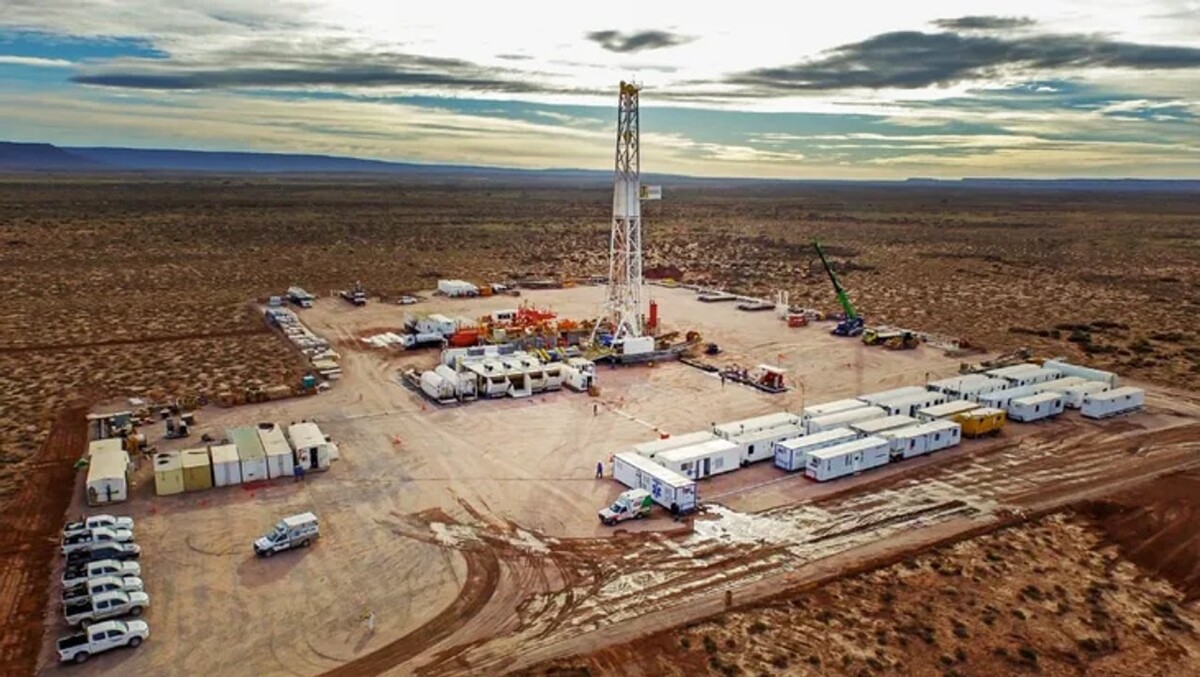
The growth of the conflict in the Middle East will favor Argentina, which could experience a shock in the export of raw materials, according to a report published by Morgan Stanley. The study, conducted by a team of economists led by Fernando Sedano, presents estimates on growth, inflation, fiscal impact, and external accounts in a scenario with a 10% increase in oil prices. The report also assesses the consequences for various countries in the region, distinguishing between exporting and importing nations, as reported by Agencia Noticias Argentinas. The first group, which includes Brazil, Colombia, and increasingly Argentina, will see its external accounts favored by the shock. «In a deregulated gasoline market, the rise in crude oil prices can represent a risk for the evolution of internal prices,» the report details, noting that the pressure on inflation would be in the range of 20 to 40 basis points of the Consumer Price Index (IPC), that is, 2 to 4 percentage points. Meanwhile, economies of the second group — Mexico and Chile — will suffer pressure on external balances and growth. If the increase is sustained, higher international prices are broadly positive for Argentina's macroeconomic outlook, reinforcing the role of oil as a driver of investment and improvement in external accounts, explains the Morgan Stanley document, emphasizing that the rise in oil boosts the energy surplus. As for the local economy, the report highlights the weight of the oil sector: «With production on a clear rise during the next decade, driven by the development of Vaca Muerta, and the sector already representing almost 6% of GDP, a more robust crude oil price amplifies investment, capital expenditure, and export income.» In fact, the text states that, if production and demand levels from 2025 remain constant, a 10% increase in the international price translates into a higher trade surplus of around $800 million. Likewise, it adds that the bank's team of economists projects an additional 11% increase in oil production for 2026, as the forecast could fall short of the expected production increases. The report, however, offers a counterbalance on the inflationary front. Buenos Aires, March 4 (NA) – The growth of the conflict in the Middle East will favor Argentina, which could experience a shock in the export of raw materials, according to a report published by Morgan Stanley. The study, conducted by a team of economists led by Fernando Sedano, presents a table with estimates on growth, inflation, fiscal impact, and external accounts in a scenario with a 10% increase in oil prices. Furthermore, the report evaluates the consequences for various countries in the region and marks the difference between exporting and importing regions, as reported by Agencia Noticias Argentinas. The first group, which includes Brazil, Colombia, and, to a growing extent, Argentina, will see its external accounts favored by the shock. «In an unregulated market for gasoline, the rise in crude can represent a risk for the evolution of internal prices,» it details, so the pressure on inflation would be in a range of 20 to 40 basis points of the Consumer Price Index (IPC), that is, 2 to 4 percentage points. Regarding growth, the study calculates that the variation would be practically neutral for Argentina, with minimal fluctuations in Gross Domestic Product (GDP).